Training Bricklayers, Building Futures
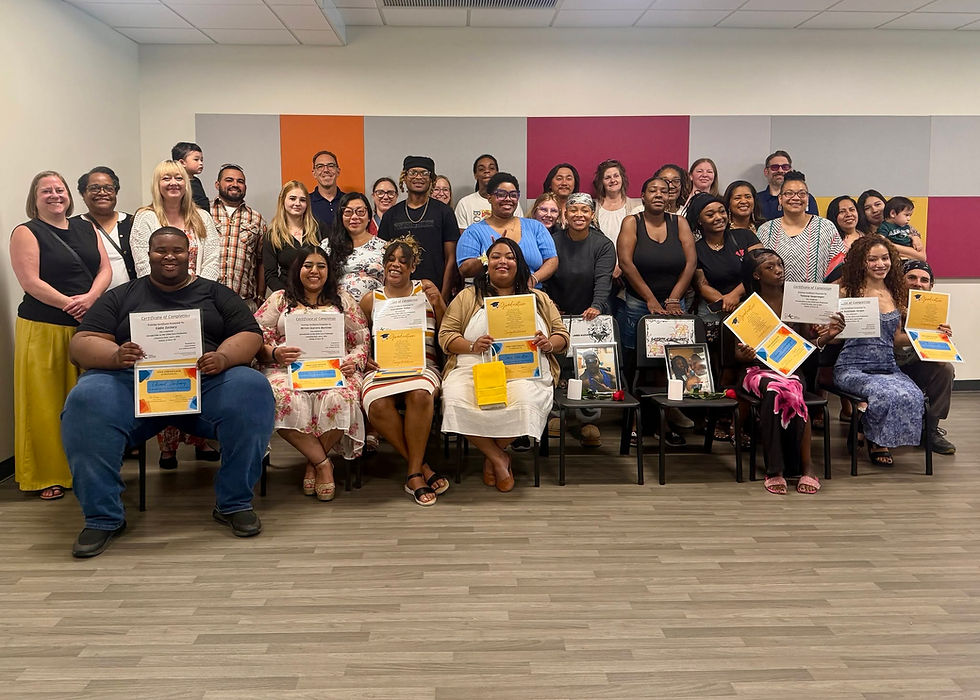
Some outcomes speak for themselves. This Bricklayers Pre-Job Training cohort — led by the Workforce Development Board of South Central Wisconsin in partnership with the International Union of Bricklayers and Allied Craftworkers (BAC), and funded through the Worker Advancement Initiative grant, finished with a 100% completion rate and a 100% employment rate.

Participants spent the training, held at The Tributary in Madison, Wisconsin, gaining real masonry and bricklaying skills with direct, hands-on exposure to the trade. On completion, every graduate interviewed with local contractors. Every one of them started work as a Bricklayer Apprentice, now employed with C.D. Smith Construction, Miron Construction, and Findorff, each earning $30 an hour or more plus benefits.

That's a first-day wage many workers spend years reaching, in a trade with a clear apprenticeship ladder ahead of it — and it's the kind of result the WAI grant was built to deliver.
Cohort training instructor Troy Buchholz put it this way:
"This partnership opens doors for individuals to step into long-term jobs they might not otherwise access. We're not just teaching technical skills—we're building work ethic and the soft skills that make someone truly workforce ready. That's a win for employers and for the future of the trade."
About the Worker Advancement Initiative
The Worker Advancement Initiative (WAI) is a Wisconsin Department of Workforce Development grant program, funded through the federal American Rescue Plan Act and administered through the state's local workforce development boards. It was created to connect people to work — those whose jobs didn't return after the pandemic, and those who struggled to gain a foothold in the labor market before it — by pairing subsidized employment and paid work experience with hard- and soft-skills training alongside local employers. WDBSCW used its Round 2 award to fund the initiatives, often in coordination with WIOA services. This program is made available by a grant from the American Rescue Plan Act Coronavirus State and Local Fiscal Recovery Funds.